
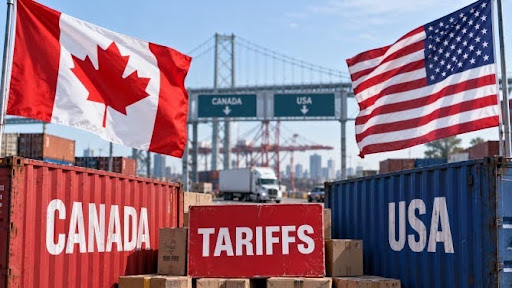
In a significant escalation of trade tensions, Canada has enacted retaliatory tariffs on a vast array of American imports, valued at billions of dollars. These tariffs, which range between 15% and 50%, were implemented at the stroke of midnight on Tuesday, impacting approximately $20 billion worth of U.S. products. The targeted imports span various industries, including steel, dairy products, appliances, agricultural machinery, pulp and paper, and electronics.
This move by Canada comes as a direct response to the United States’ decision to impose a 50% tariff on $20 billion worth of Canadian goods. Canadian Prime Minister Mark Carney announced the measures, emphasizing the nation’s intent to diversify its economic relationships and lessen dependency on the U.S. by pursuing stronger trade ties with other countries.
The trade conflict has seen U.S. President Donald Trump levy tariffs on Canadian exports, including vehicles and raw materials, claiming that Canada has exploited trade relations with the U.S. Among the affected Canadian products are hockey sticks and cement, which account for about 5.5% of Canada’s exports to its southern neighbor.
Worsening diplomatic relations accompany the intensifying trade dispute, with Trump also threatening to limit the sale of Canadian aerospace manufacturer Bombardier’s aircraft in the U.S., unless the company relocates more of its manufacturing operations there. This trade row has broadened into a wider diplomatic standoff between the two nations.
Efforts to resolve these issues faltered when trade negotiations between Canada and the U.S. failed in August. Canadian officials attributed the breakdown to the U.S. introducing new demands and restrictions that were deemed unacceptable by Ottawa, further complicating the possibility of reaching a mutual agreement.