
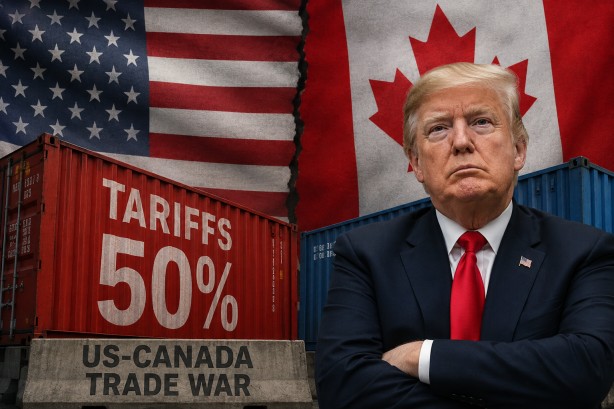
In a significant development in the ongoing trade tensions, US President Donald Trump has heightened the trade dispute with Canada following unsuccessful negotiations in Washington. The United States has introduced 50% tariffs on an estimated $20 billion worth of Canadian goods. Key items affected by these tariffs include hockey sticks and medical supplies. In response to these measures, Canadian Prime Minister Mark Carney has pledged to implement equivalent tariffs on US goods starting September 8, matching the US actions “dollar for dollar.”
Prime Minister Carney has characterized the US tariffs as a direct attack on Canada, resolutely stating that his government will not acquiesce to the demands that were presented during the recent talks. On the American side, US Trade Representative Jamieson Greer has justified the tariffs as a necessary step to safeguard American workers and maintain the integrity of supply chains.
This latest escalation in the trade conflict has raised concerns about the stability and future of the United States-Mexico-Canada Agreement (USMCA). The trade pact is integral to managing nearly $2 trillion in annual trade among the three nations, and the heightened dispute threatens to disrupt these economic ties.
The intensifying trade rift could lead to increased costs for businesses and consumers on both sides of the border, potentially exacerbating the economic strain between the United States and Canada. As the situation unfolds, businesses and stakeholders across various sectors are closely monitoring developments, aware of the broader implications for the North American economy.