
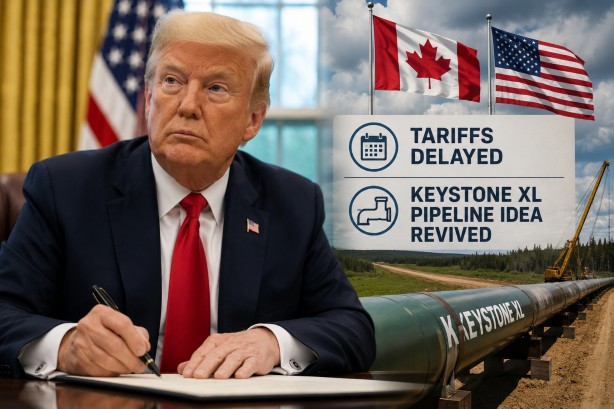
In a recent development, US President Donald Trump has announced a three-day delay on the implementation of a proposed 50% tariff on Canadian goods, citing significant progress towards a new trade agreement between the two nations. Trump expressed optimism, stating that a deal is nearing completion. Meanwhile, Canadian Prime Minister Mark Carney acknowledged the “substantial progress” made, though he noted that further work is required to finalize the agreement.
The planned tariffs, which would impact billions of dollars in Canadian exports such as wine and hockey equipment, are now on hold, giving negotiators from both sides additional time to iron out the terms of the agreement. This delay is a crucial development for Canadian businesses concerned about increased costs and diminished access to the US market.
Adding another layer to the negotiations, Trump hinted at the possibility of reviving the Keystone XL oil pipeline project, suggesting it could “be awoken from the grave.” However, he did not elaborate on how this controversial project might relate to the ongoing trade discussions. The Keystone XL pipeline was intended to carry oil from Canada’s western regions to US refineries but was halted in 2021 after a key permit was revoked, facing strong opposition from environmentalists, landowners, and Indigenous groups.
This move comes amid a backdrop of strained US-Canada relations characterized by repeated threats of tariffs and retaliatory trade measures. Despite these tensions, the two countries maintain a robust trading partnership, with hundreds of billions of dollars in goods and services exchanged each year. The proposed tariffs had heightened fears among Canadian businesses about potential economic repercussions.