
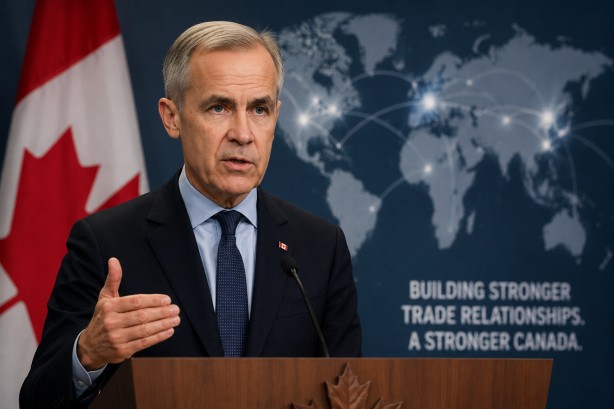
In a series of recent speeches, Canadian Prime Minister Mark Carney has underscored a pivotal change in Canada’s diplomatic strategy concerning its ties with the United States and its stance within the evolving global landscape. Speaking at the World Economic Forum held in Davos, Carney highlighted a deepening fracture in the international order. He called for enhanced collaboration among middle powers, urging nations to build alliances grounded on mutual interests rather than relying heavily on any single global power.
Carney’s remarks reflect a broader strategic pivot as Canada navigates its international relationships amid geopolitical shifts. In a notable development, Carney announced that Canada would withdraw from trade negotiations with the United States. This decision comes in the wake of persistent tensions over tariffs and various trade policies, signaling Canada’s intent to diversify its economic partnerships and lessen its reliance on its southern neighbor.
While acknowledging the extensive economic interconnection between Canada and the United States, Carney stressed the necessity of safeguarding Canada’s sovereignty and securing its long-term national interests. This shift in trade strategy underscores Canada’s proactive approach to fostering stronger economic ties with other global partners, thereby reducing its economic vulnerability.
The ongoing trade frictions could have far-reaching consequences for economic cooperation within North America. As Canada seeks to forge more robust alliances with other global partners, the dynamics of economic collaboration in the region may experience significant change. Carney’s stance highlights the delicate balance between maintaining vital economic links with the United States and pursuing a diversified, independent foreign policy.