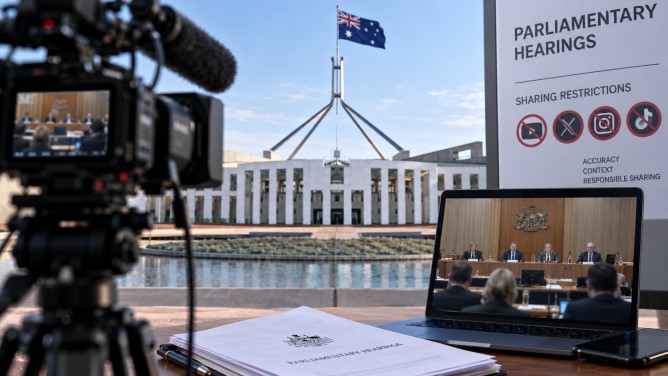
Australia’s leading public service officials have advocated for new guidelines on the editing and dissemination of video footage from parliamentary hearings, emphasizing that decontextualized clips on social media can result in ridicule and harassment of individuals. The Secretaries Board, which consists of the heads of various government departments, argued that public servants did not consent to their images and testimony being repurposed for political agendas or in manners detrimental to individuals and the public service as a whole.
The board’s recommendations include prohibiting the editing or captioning of parliamentary footage when shared on digital platforms. They also suggested implementing restrictions on politically charged content that targets individual officials for mockery or harassment. Instead, the board proposed that full recordings and transcripts of hearings be made publicly accessible, with the option to disable comments, thereby ensuring that public attention remains on the evidence, administrative processes, and accountability, rather than on individual personalities.
This proposal emerged after Deputy Secretary of the Defence Department, Celia Perkins, voiced concerns that public servants’ testimonies, when reposted on social media outside the formal parliamentary context, do not have the consent of those who provided them. However, her request for these restrictions was turned down by a Senate committee, following counsel from the Senate clerk.
Opposition to the proposed measures came from Greens Senator Steph Hodgins-May, who contended that parliamentary hearings are inherently public sessions and that Australians should have unfettered access to such content. She argued that imposing limits on how parliamentary footage is used could diminish parliamentary scrutiny and transparency, though she acknowledged the importance of maintaining respectful public discourse.