
The Australian Stock Exchange: As Trump’s sweeping tariff policies spark worldwide market chaos, financial experts are drawing stark comparisons to the early days of the 2008 global financial meltdown. From Asia to Wall Street, fear is mounting that this could mark the beginning of another economic reckoning.
Markets across the globe are in freefall as the financial world reels from U.S. President Donald Trump’s aggressive new tariffs, sparking echoes of the 2008 global financial crisis. Australia’s ASX 200 nosedived 4.2% on Monday, wiping out around $110 billion in market value, extending a brutal three-day sell-off.
What began as a cautious shrug to Trump’s announcement quickly turned into widespread panic. While local traders initially downplayed the fallout, the rapid acceleration of losses suggests reality is setting in: the world may be on the brink of a major economic unraveling.
China’s stock markets bore the brunt of the chaos, with the Shanghai Composite down over 7% and Hong Kong’s Hang Seng suffering a staggering 13% drop. European markets followed suit, as Germany’s DAX plummeted 6% and London’s FTSE shed nearly 5%.
In the U.S., investor optimism swiftly collapsed. After a 5% fall in the S&P 500 on Thursday, traders were rattled by another 6% loss on Friday. Futures are pointing to yet more red, signaling no end in sight to the market meltdown.
The eerie similarities to the 2008 crisis are hard to ignore: markets riding high on tech-fueled optimism, whispers of overvaluation, and now, the slow-motion realization that a reckoning may be underway. Veteran traders and economists, many of whom weathered the last financial storm, are sounding the alarm.
Back in 2008, it was subprime mortgages and toxic assets. In 2025, it’s the deliberate dismantling of global trade. Trump’s tariffs — which he frames as necessary corrections — are being seen by many as a calculated attack on the international economic system that the U.S. once championed.
This isn’t just a negotiating tactic gone too far. It’s a seismic shift. A reordering of global financial norms. And much like the early days of the GFC, the signs were there: record-high stock valuations, rising inflation, tightening interest rates, and smart money — like Warren Buffett’s Berkshire Hathaway — moving to the sidelines and stacking cash.
While there are differences this time — no single event like Lehman’s collapse has triggered the panic — the pattern feels painfully familiar. Steady declines turn into spirals. Optimism fades into fear. Confidence erodes with every trading session.
With global markets gripped by volatility and uncertainty, the warning signs are blinking red. The world may be standing at the edge of another financial abyss — and the fall could be long and hard.
Trump’s Tariffs Trigger Market Chaos, Reviving 2008 Crisis Fears on the Australian Stock Exchange
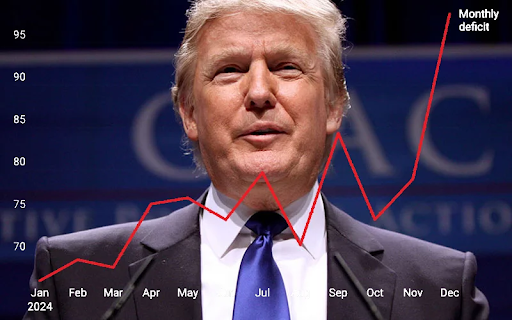
Picture Credit: www.bestmag.co.uk
289