
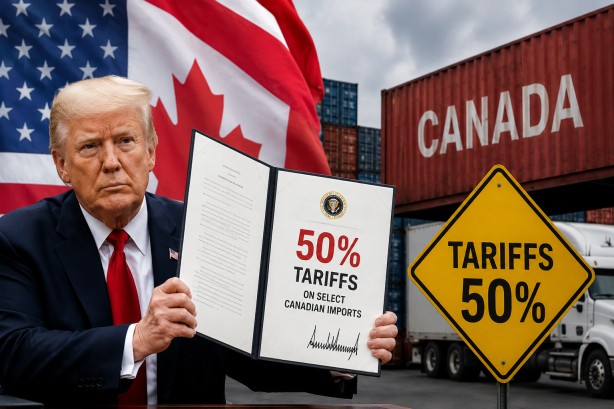
President Donald Trump has authorized a new set of tariffs, imposing a 50% increase on specific imports from Canada. This decision, he claims, is a response to what he perceives as Canada’s discriminatory treatment towards American goods. The tariffs specifically target automotive materials, dairy products, and alcoholic beverages, marking a significant escalation in trade tensions between the two countries.
These measures were enacted through a series of executive orders amidst the ongoing trade negotiations under the United States-Mexico-Canada Agreement (USMCA). The Trump administration justifies the tariffs as a necessary step to counter what it considers unfair trade practices that are detrimental to U.S. industries. This move underscores the administration’s commitment to prioritizing American economic interests in international trade.
The introduction of these tariffs is likely to intensify the already tense negotiations between Washington and Ottawa. Both sides are grappling with issues related to trade and market access, and this development adds another layer of complexity to the discussions. Businesses and exporters on both sides of the border are now closely monitoring the situation, awaiting Canada’s response and assessing the potential repercussions on North American trade.
The decision to impose these tariffs highlights the challenging economic relationship between the United States and Canada. With the stakes high, the outcome of the ongoing dialogue could have significant implications for the economic ties that bind the two countries. As the situation evolves, stakeholders remain vigilant, anticipating further developments in the trade landscape.