
The European Parliament has taken decisive action by suspending the US trade agreement ratification process in response to President Trump’s threat of 10% tariffs conditional on European support for his Greenland acquisition. This move represents the most concrete material response Brussels has demonstrated against what European leaders have termeblackmail.
Trade committee chairman Bernd Lange established firm boundaries for future negotiations, declaring that threats involving Greenland must end before any possibility of compromise exists on the trade deal. The suspended agreement had promised to revolutionize American exports to Europe by establishing zero-percent tariffs on many industrial products.
Despite the trade deal freeze, the EU’s commitment to purchase $750 billion in American energy remains fully intact. Lange confirmed this energy arrangement operates independently from the tariff negotiations, allowing Brussels to preserve energy cooperation while taking a principled stand.
The diplomatic breakdown manifested when European Commission President Ursula von der Leyen altered her travel itinerary following her parliamentary address. She cancelled a Davos visit where she might have encountered Trump, returning immediately to Brussels for emergency summit preparations.
Parliament’s separate decision to refer the Mercosur trade deal with Latin American countries to the European Court of Justice by a narrow 10-vote margin drew widespread criticism. Alongside condemnation from Lange, the European Commission, and German Chancellor Friedrich Merz, German car manufacturers specifically denounced the move, concerned about access to Latin American markets. The automotive industry’s opposition underscores the economic stakes. While the Commission could provisionally implement Mercosur, Lange warned of “huge institutional conflict.” The Thursday summit focuses on US relations and €93 billion in counter-tariffs.
Car Manufacturers Add Voice to Mercosur Opposition Chorus
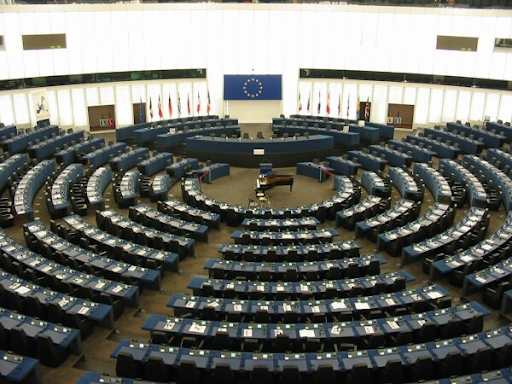
Photo by Cédric Puisney, via wikimedia commons
8