
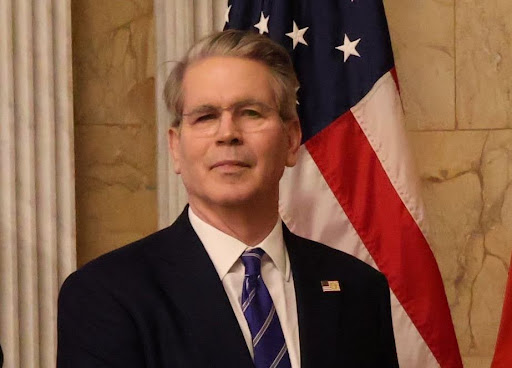
The discourse surrounding United States immigration policy has taken a nuanced turn following recent clarifications by Treasury Secretary Scott Bessent regarding President Donald Trump’s stance on H-1B visas. While initial comments from the President during a Fox News interview seemed to suggest a softening of his historically hardline approach—where he admitted a need for global talent—Bessent has stepped in to define the specific parameters of this “need.” According to the Treasury Secretary, the administration’s policy is not intended to permanently replace American workers with foreign counterparts. Instead, the strategy is being framed as a strict “knowledge transfer” initiative. The objective is to grant entry to highly skilled foreign experts specifically for the purpose of training the domestic workforce, ensuring that American employees can eventually assume these technical roles.
Bessent’s interview with Fox News host Brian Kilmeade shed light on the operational mechanics of this proposed policy, emphasizing a timeline that is distinctly temporary. He outlined a vision where overseas workers would be welcomed into the country for a finite period—ranging from three to seven years—to bridge the current skills gap. This duration is calculated to be sufficient for the transfer of critical technical knowledge to US workers. Once this training period concludes and the domestic workforce is deemed proficient, the foreign experts would be expected to return to their home countries. Bessent described this cycle of “coming in, teaching American workers, then returning home” as a “home run” for the American economy, suggesting a policy that prioritizes long-term domestic self-sufficiency over permanent reliance on foreign labor.
A major justification for this policy shift lies in the erosion of specific industrial capabilities within the United States over the last few decades. Bessent pointedly noted that there are certain jobs currently out of reach for the average American worker simply because the industries have laid dormant for too long. He cited shipbuilding and semiconductor manufacturing as prime examples where the US has ceded ground and lost institutional knowledge. By acknowledging that “an American can’t have that job, not yet,” the administration is effectively admitting a temporary dependency on foreign expertise to jumpstart these dormant sectors. The narrative is constructed around the idea that this is a rebuilding phase, requiring external help to reconstruct the internal industrial engine.
This clarification comes in the wake of President Trump’s candid remarks regarding the limitations of the current US workforce. In his earlier interview, Trump pushed back against the notion that America already possesses sufficient talent to fill all technical roles immediately. He bluntly stated, “No, you don’t have certain talents and you have to… People have to learn,” signaling a pragmatic recognition of the skills gap. These comments initially confused observers who are accustomed to the “America First” rhetoric that usually prioritizes immediate employment for citizens. However, when viewed through the lens of Bessent’s explanation, Trump’s comments appear to be the foundation for this “train-the-trainer” visa model rather than a departure from his protectionist roots.
Ultimately, this policy proposal attempts to thread the needle between economic necessity and nationalist politics. By framing the H-1B visa program as a temporary educational tool rather than a path to permanent residency or citizenship, the administration hopes to satisfy business demands for skilled labor without alienating a voter base concerned about job displacement. The Treasury Secretary’s comments serve to realign the President’s “talent” remarks with the broader “Make America Great Again” agenda, positing that the importation of foreign skill is merely a stepping stone toward a future where American workers are once again the primary masters of all major industrial trades.
“Train, Then Leave”: Treasury Secretary Clarifies Trump’s Vision for Temporary Skilled Migration
Picture Credit: commons.wikimedia.org
36