
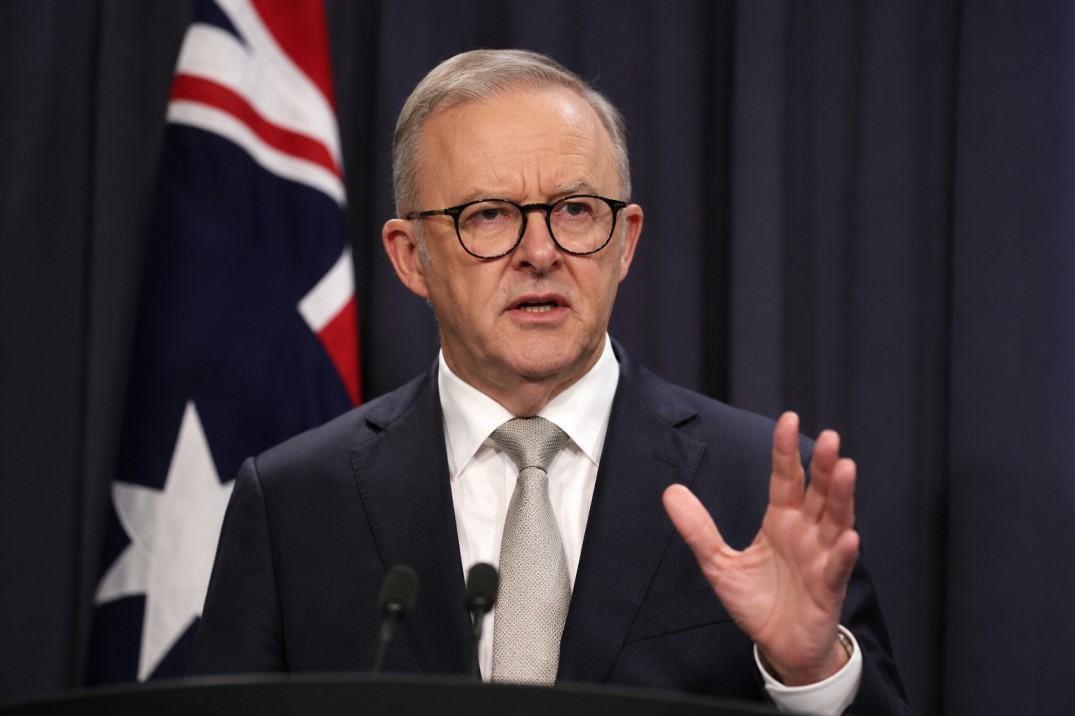
Australia’s Prime Minister, Anthony Albanese, has issued a stern rebuke to China following its recent test of a nuclear-capable intercontinental ballistic missile (ICBM) over the Pacific Ocean. Albanese expressed concerns that such actions pose a significant threat to regional peace and stability. He emphasized the destructive potential of the missile if paired with a nuclear warhead, advocating for a reduction, not an increase, in nuclear armaments within the region. The Australian leader affirmed that his country would persist in voicing its objections to Beijing regarding these military activities.
While visiting the Solomon Islands, Albanese labeled the missile test as a provocative act that risks destabilizing the Pacific region. Solomon Islands Prime Minister, Matthew Wale, echoed this sentiment, calling on global powers, including China and the United States, to refrain from missile testing in the Pacific. Wale urged these nations to focus on fostering partnerships with Pacific countries instead of contributing to potential security threats.
In response, China defended the missile launch, categorizing it as a routine military exercise conducted within the bounds of international law. The Chinese government stated that neighboring countries were informed beforehand and maintained that the exercise was not directed against any particular nation. However, Australian officials have dismissed this explanation, arguing that the advance notice was inadequate and that the exercise did not adhere to international norms for ballistic missile test notifications.
The missile test has sparked criticism from multiple countries, with mounting apprehensions that increased military operations in the Indo-Pacific region could escalate tensions and usher in a new phase of strategic rivalry. The incident underscores the fragile nature of regional security and the importance of dialogue and cooperation among nations to prevent further escalation.