
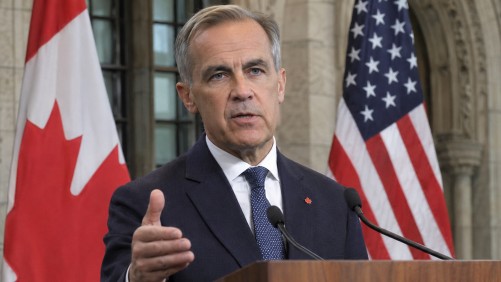
Canadian Prime Minister Mark Carney has affirmed that the Trump administration will continue to be the primary decision-maker in U.S.-Canada trade negotiations, even after significant Democratic gains in the recent U.S. midterm elections. Speaking in Montreal, Carney emphasized that the executive branch, led by the U.S. president, plays the central role in shaping trade agreements, rather than Congress.
Carney’s comments come amid ongoing trade tensions between the two nations, exacerbated by U.S. tariffs on Canadian goods. These tariffs became a focal point during the midterm elections, with Democrats criticizing them for driving up prices and vowing to challenge the measures. Some Democratic lawmakers have also called for the removal of these tariffs.
Despite these tensions, Carney indicated that Canada remains committed to direct negotiations with the Trump administration to address ongoing trade disputes. He noted that while there has been some progress in areas such as cultural protections and French-language rights, Canada still faces challenging issues in discussions with Washington.
Trade talks reached a stalemate in August when Canada suspended negotiations in response to U.S. demands deemed unacceptable. Subsequently, Washington imposed 50% tariffs on billions of dollars worth of Canadian goods, prompting Canada to implement retaliatory measures.
Despite the disagreements, Carney expressed a willingness to continue dialogue with President Trump, emphasizing the need for both governments to resolve their differences and strive towards a mutually beneficial trade agreement. He underscored the importance of a single negotiating authority in maintaining an effective trade strategy.