
President Luiz Inácio Lula da Silva has positioned himself as a defender of democratic accountability by announcing his intention to veto legislation that would reduce sentences for coup participants. The bill passed both congressional chambers this week, with the senate providing final approval on Wednesday. Former President Jair Bolsonaro, whose 27-year sentence for masterminding the coup attempt could be dramatically shortened, is the most prominent beneficiary.
Lula’s public statements have framed the veto as a matter of principle, emphasizing that individuals who attack democratic foundations must face appropriate legal consequences. The president also demonstrated political realism by acknowledging that the conservative-majority congress could override his veto through a subsequent vote. This transparent discussion of political dynamics provides important context for understanding the potential constitutional confrontation ahead.
Legal analysts have determined that the legislation would transform Bolsonaro’s incarceration timeline significantly, reducing his required time in high-security detention from six years to approximately 25 months. The reduction mechanism works by consolidating multiple related criminal charges and applying only the penalty associated with the most serious offense. Standard programs that allow prisoners to earn sentence reductions through positive behavior and educational engagement would remain available under this new framework.
The former president’s current circumstances include detention in a specialized facility at federal police headquarters, where enhanced security protocols are maintained for high-profile prisoners. Bolsonaro’s legal representatives are simultaneously working to obtain authorization for medical procedures, specifically hernia surgery that they characterize as necessary. Senator Flávio Bolsonaro has publicly described the legislation as the best realistic outcome given current political realities, signaling the family’s pragmatic approach.
The legislation’s application extends throughout the network of convicted coup participants, affecting dozens of military officers and hundreds of civilians who engaged in related violence. This broad scope has generated significant concern among advocates for democratic accountability, who had celebrated the original convictions as a watershed moment for Brazilian justice. Recent polling data demonstrates that the majority of Brazilian citizens oppose reducing these sentences, highlighting a disconnect between legislative action and popular sentiment that could have implications for future electoral politics.
Veto Power Becomes Focal Point in Brazilian Political Crisis
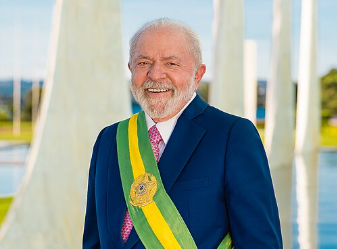
Photo by Planalto Palace from Brasilia, Brazil, via wikimedia commons
54